
5S for industrial workshops
Every tool has its place.
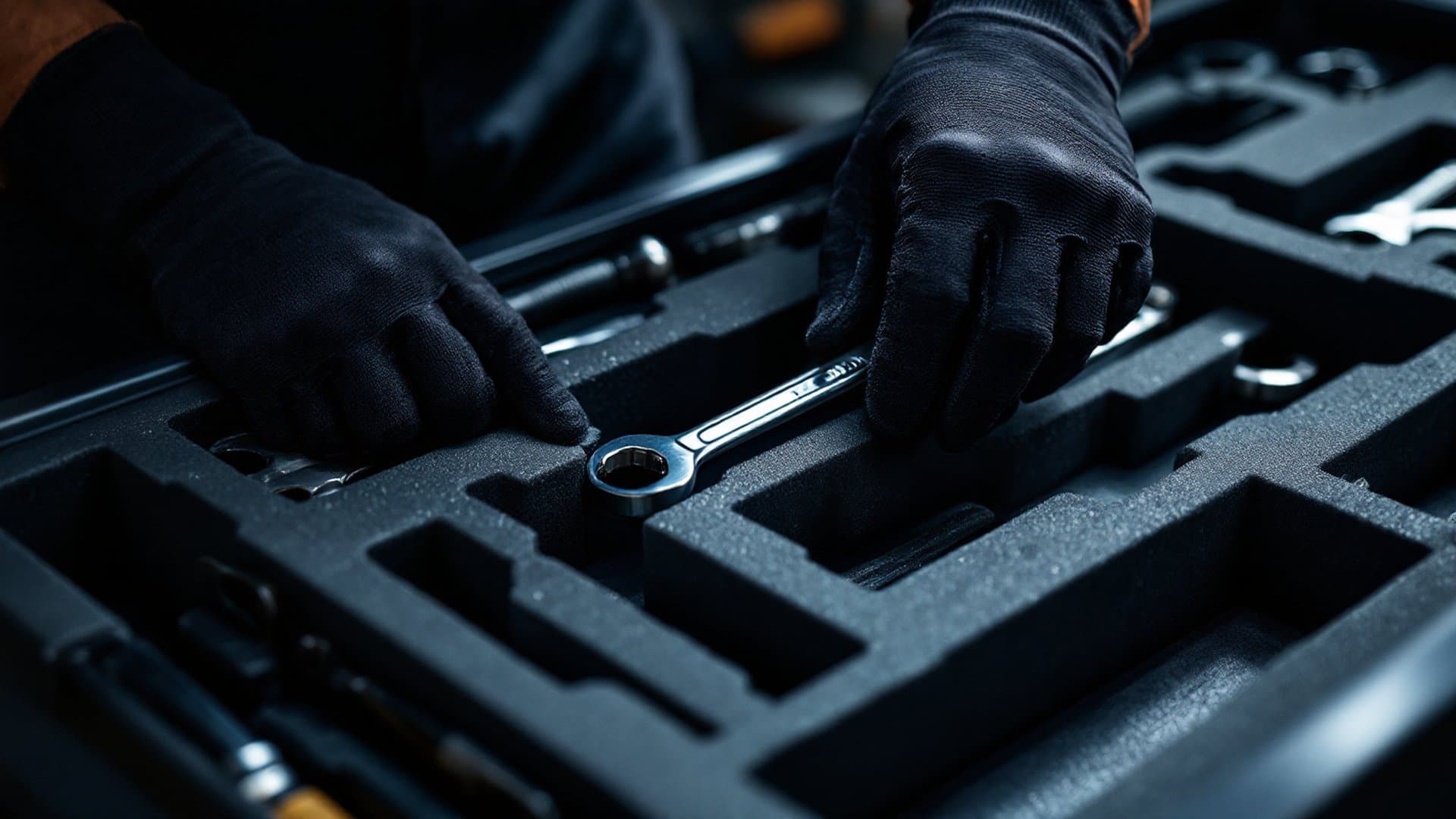
Shadow-fit drawer inserts traced from the tools you already own. You approve the layout before anything is made.
Who this is for
When order is essential.
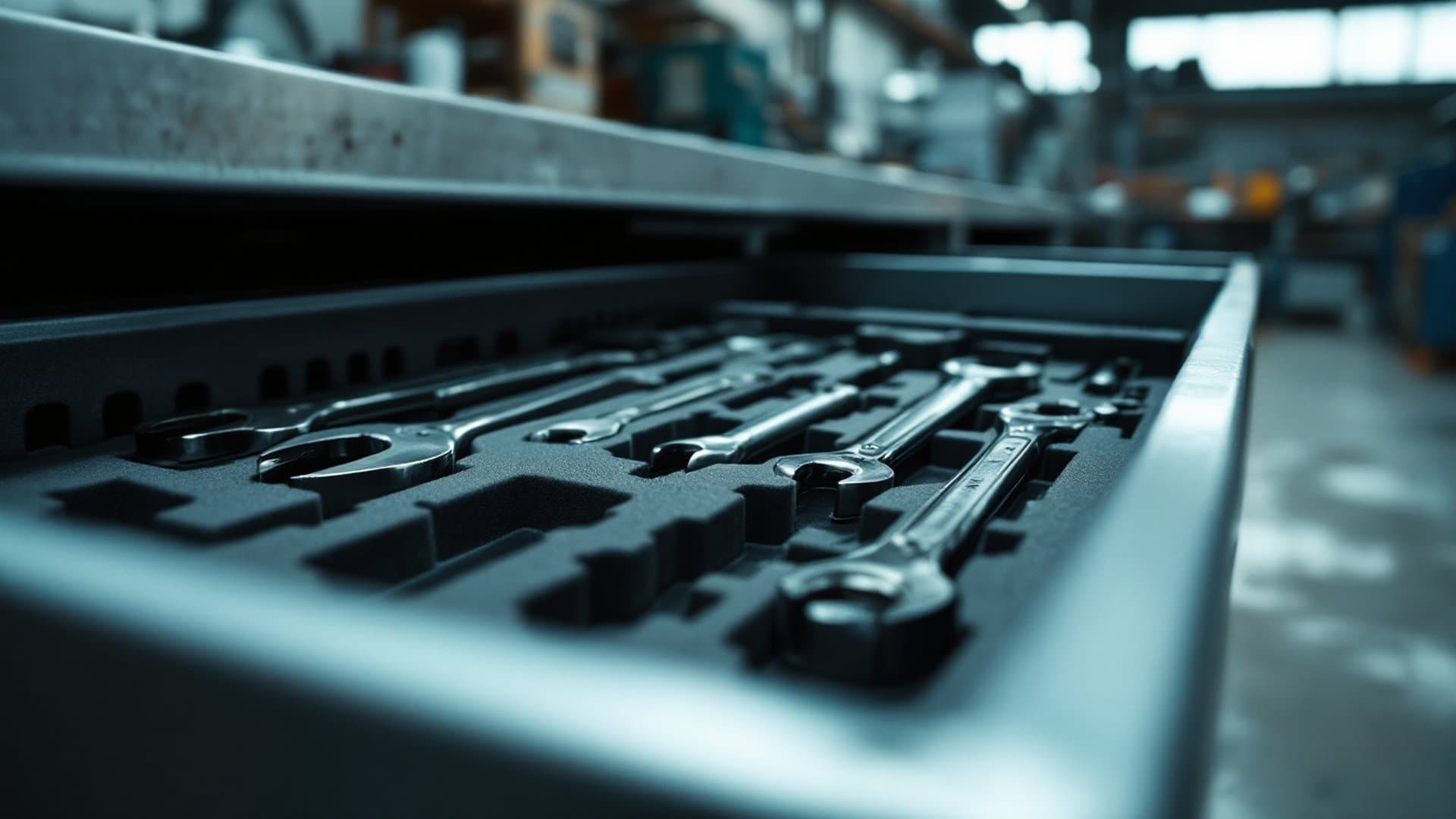
Workshops and garages
Several benches doing the same work.
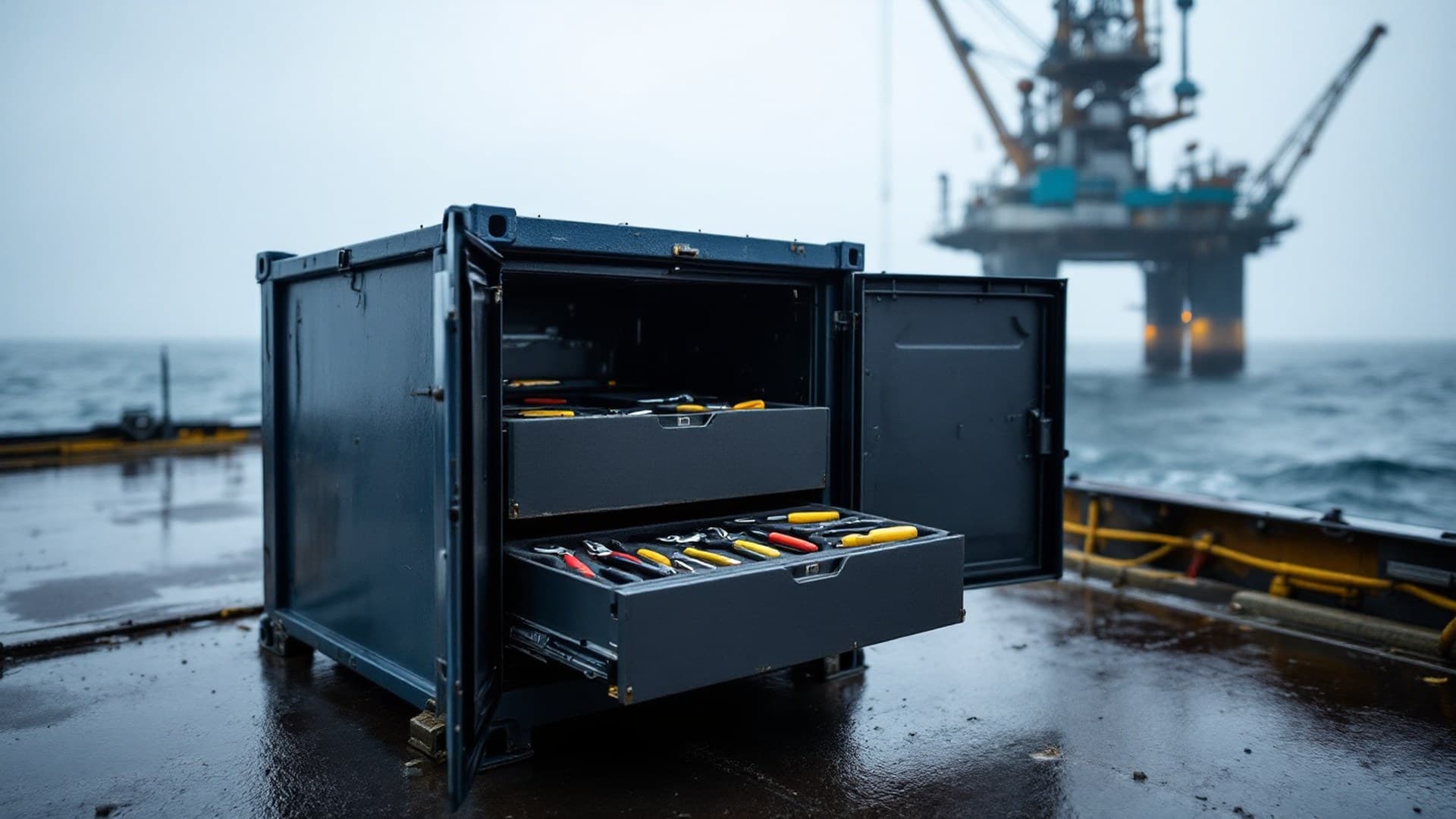
Offshore and marine
Containers and kits that leave the quay complete.
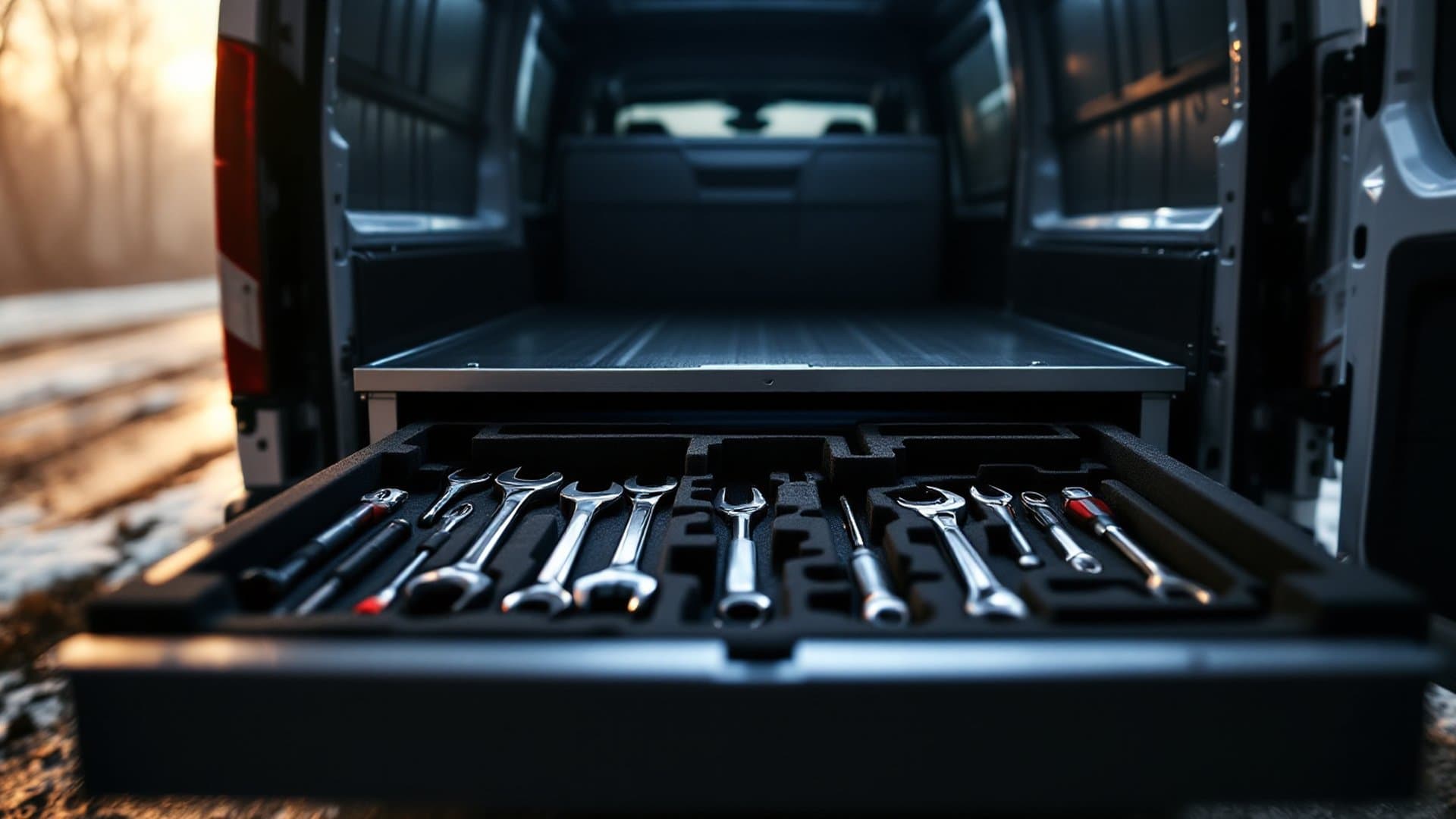
Service fleets
Vans that leave with a provably complete set.

Production and assembly
Stations where a missing tool stops a line.
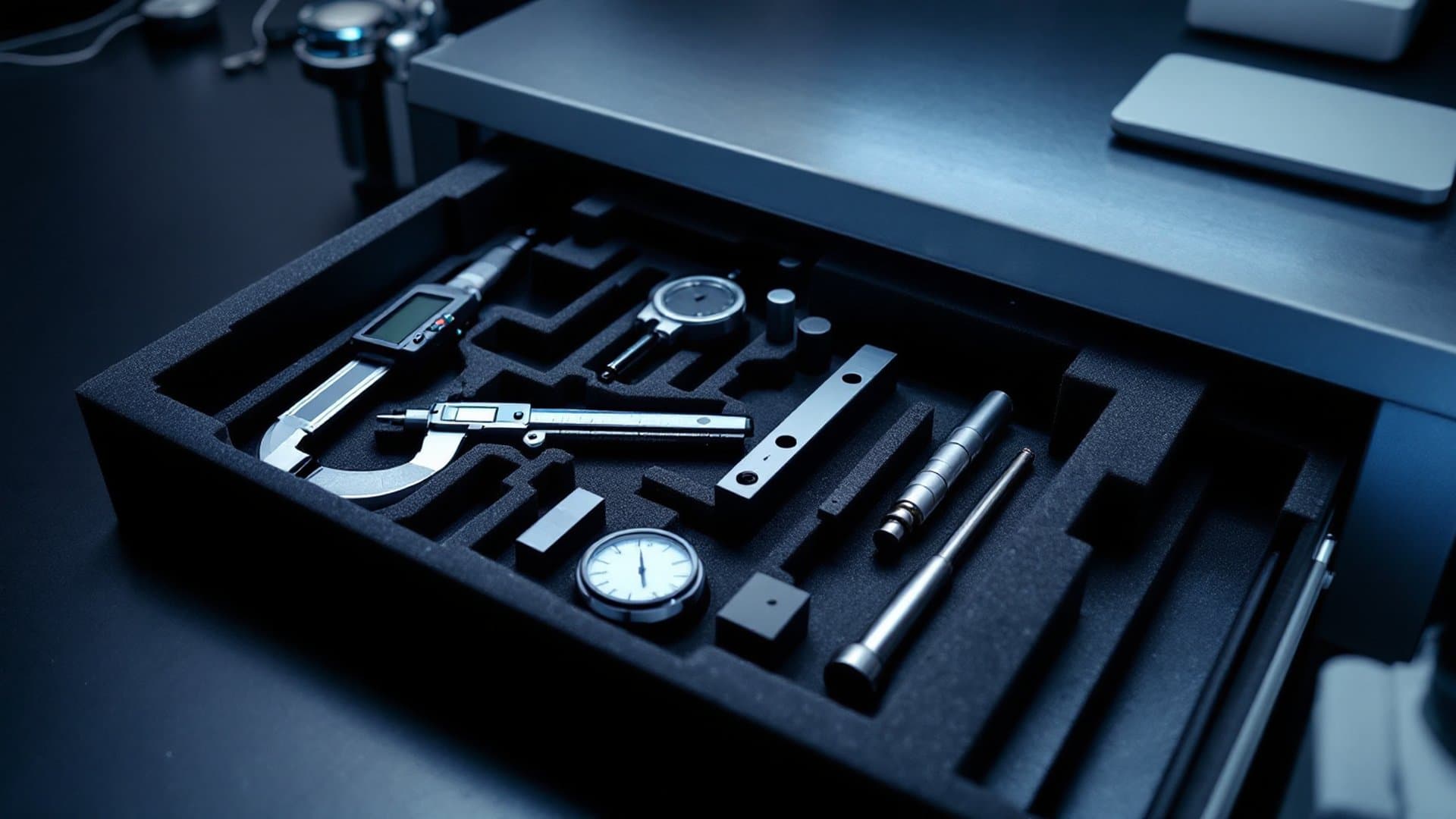
Labs and calibration
Instruments with a defined place.
Trade teams
Crews sharing kit across sites.
The cost of a tidy-ish shop
Nobody schedules the time it takes to find a tool.
Shadow boards work. A tool is in its outline or it is visibly gone, and a supervisor reads the workstation from the doorway.
What stops shops is the work of getting there: measuring, drawing and cutting for every bench while the tools are in use. That is the part we take.
What you get
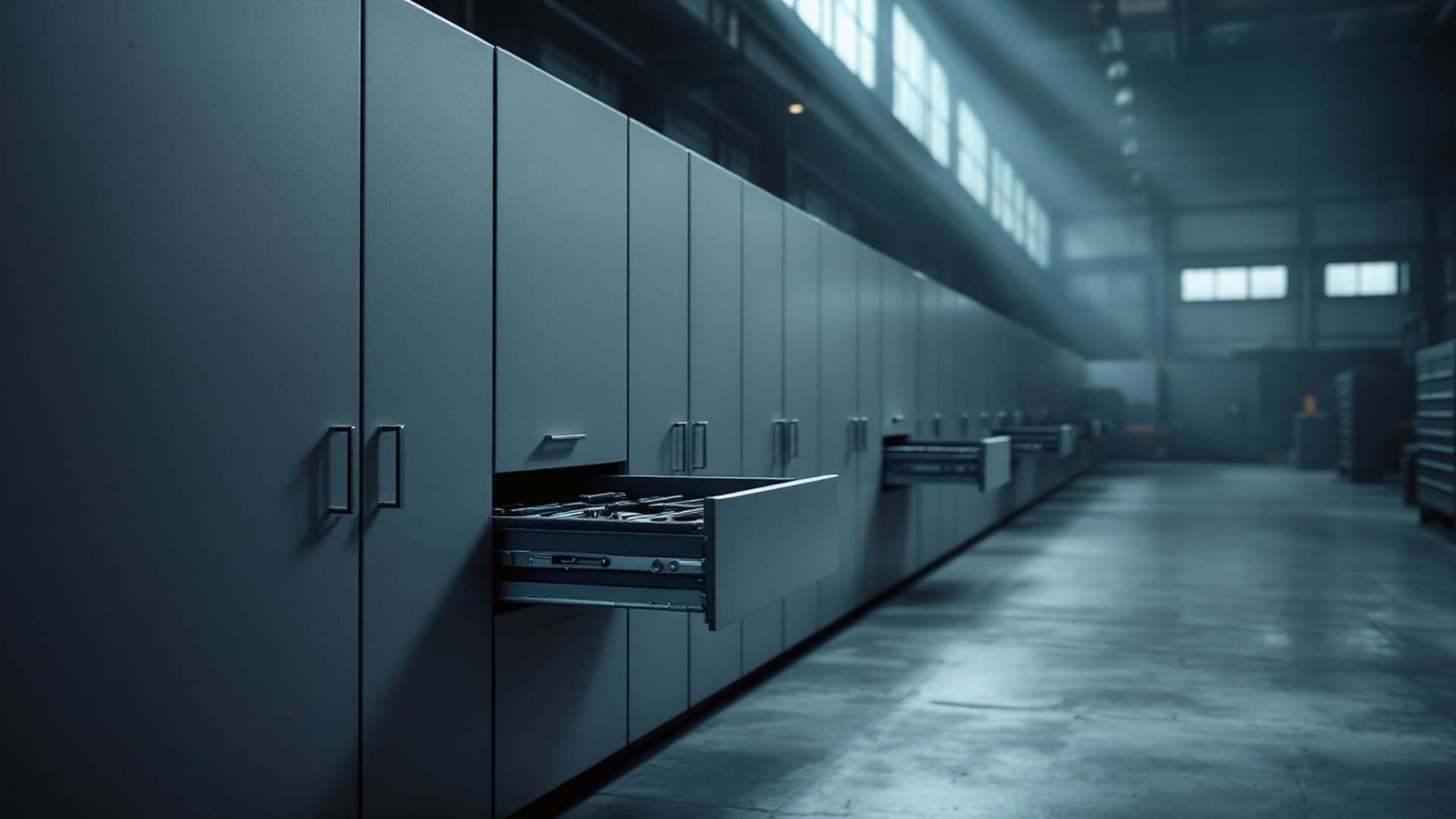
A drawer that reads from across the room.
Boxes built around the outlines of your tools, on one 42 mm grid.
 01
Top drawerHand tools, one pocket each.
 02
Bottom drawerWrench rack 10 to 21, pliers strip behind it.
- 01Shadow-fitOne pocket per tool, traced from a photo of that tool.
- 02DividedPlain compartments for fasteners, bits and consumables.
- 03MarkedWorkstation numbers, initials or your company mark, set into the box.
- 04ModularWhen a tool changes, you replace one box, not the drawer.

Offshore, on the road, on site
From the bench to the deck.
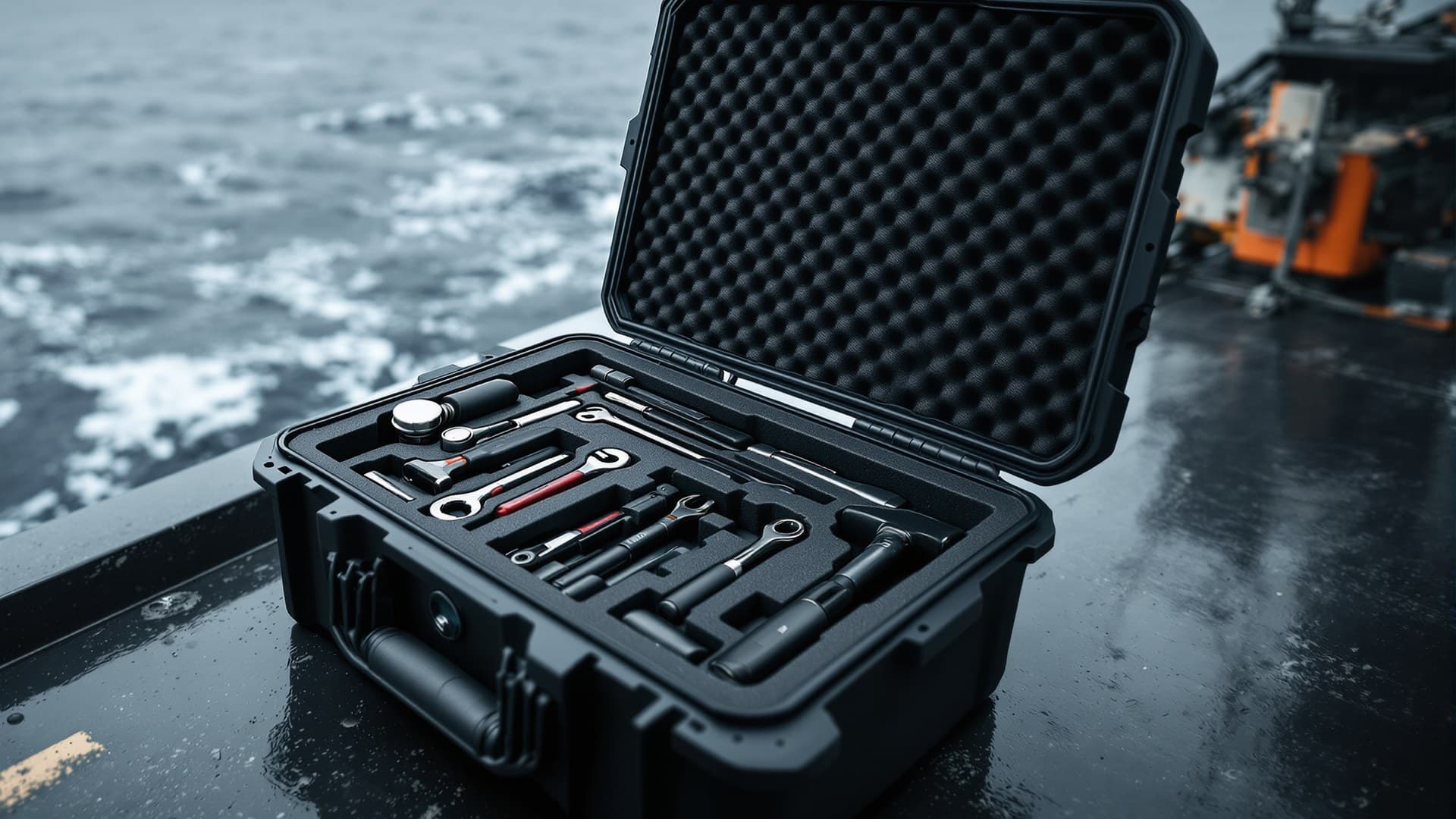
Offshore, a missing tool is a boat, a lift and a day. The same boxes go into a tool container, a transport case or a service van, and read complete before the kit leaves and when it comes back.
- 01Offshore tool containersEvery drawer is a shadow board, checked from the door before the lift.
- 02Shippable toolkitsA job kit in a transport case. The case is its own checklist.
- 03Service vansThe van leaves in the morning with a set that is visibly complete.
How it works
Four steps. Three of them are ours.
- 01
We come and look
A visit to your shop. Scope agreed on the spot.
- 02
We capture your tools
Photographed and measured on site. Nothing from a catalogue.
- 03
You approve the layout
Every drawer on screen before anything is made.
- 04
We deliver
A kit that drops into the drawers it was designed for.
Why it holds
A standard, not a one-off tidy-up.
An approved drawer is a document. It can be built again for the next bench, van or site.
Approve once, repeat everywhere
The same layout goes to every identical workstation.
Auditable at a glance
An incomplete drawer is obvious without opening anything.
Change one box, not the drawer
When a tool moves on, one box is replaced. The rest stays as approved.
Traced, not catalogued
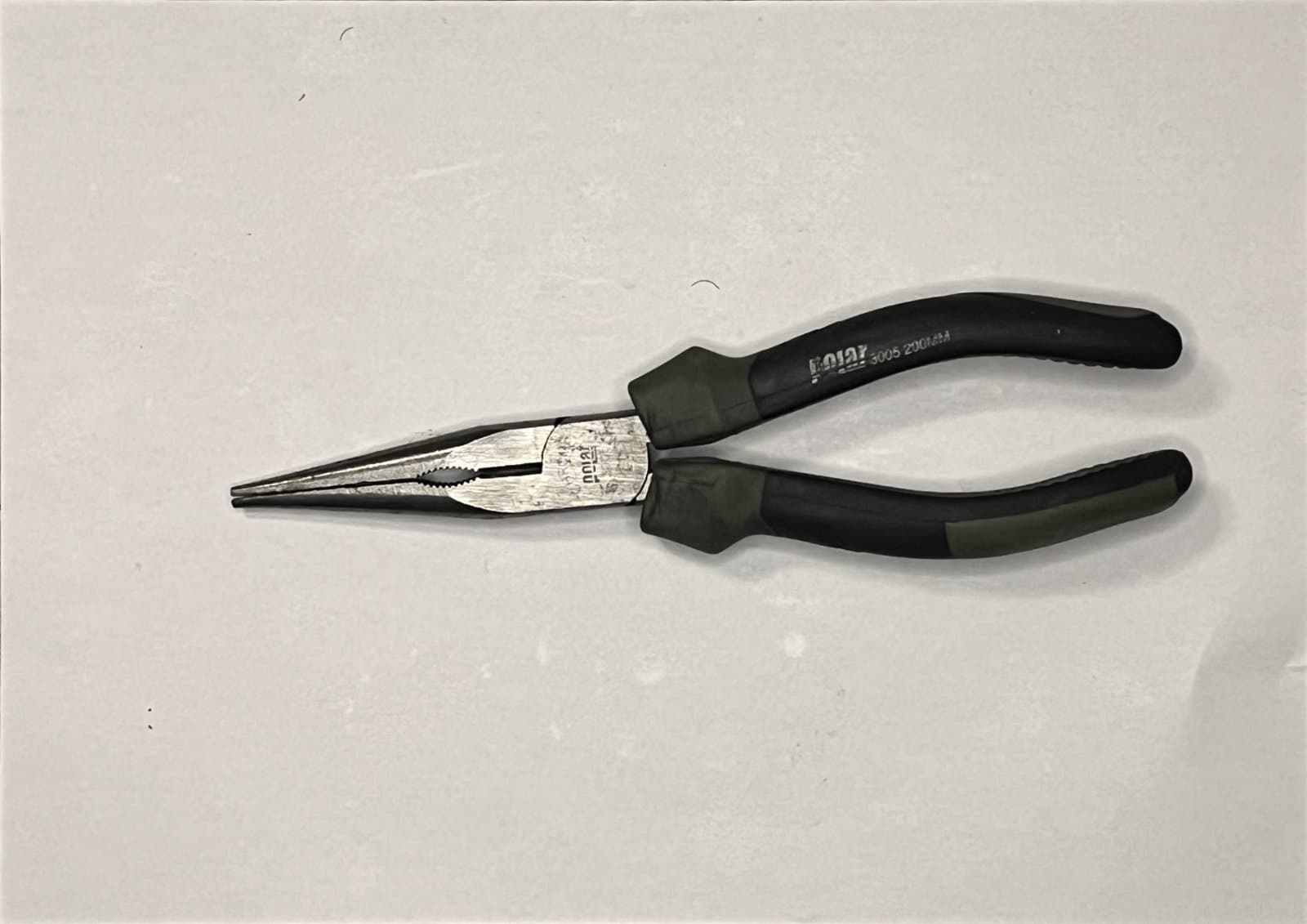
Every pocket starts as a photograph of your tool.
Real tools from real drawers. Each outline is traced from the photo beside it, at true size.
- Photo
- Outline
 PhotoOutline
 PhotoOutline
 PhotoOutline
 PhotoOutline
 PhotoOutline
 PhotoOutline
Start with one workstation
Tell us roughly what you have, and where you are.
We visit, look at the tools, and come back with a plan. Nothing to commit to until you have seen it.